As I’m thinking about moving into the fall season, I think about the start of school. Although it has been many moons since I graduated with my master’s degree, it is still the time I mark to learn. With that in mind, my fall focus is feminist reading. The foundations of feminism for me include
Feminism: Feminism is a social and political movement that advocates for gender equality and women’s rights. It seeks to challenge and dismantle women’s systemic oppression and discrimination in various aspects of life, including politics, economics, and social norms.
Gender Equality: One of the central goals of feminism is to achieve gender equality, which means that all individuals, regardless of gender, should have equal rights, opportunities, and access to resources. This includes equal pay for similar work, equal representation in leadership positions, and eliminating gender-based violence and discrimination.
Intersectionality: Intersectionality is an essential concept within feminism that recognizes the interconnected nature of different forms of oppression and discrimination. It acknowledges that individuals experience multiple intersecting identities and that systems of power and privilege operate differently depending on race, class, sexuality, and ability. Intersectional feminism addresses the unique experiences and challenges of individuals belonging to multiple marginalized groups.
Based on these foundations, here is my reading list.
Girlhood by Melissa Febos:We first must understand the narratives we tell ourselves to bring our identity to work. In her powerful new book, critically acclaimed author Melissa Febos examines the narratives women are told about what it means to be female and what it takes to free oneself from them.
Feminasty by Erin Gibson:We need a bit of humor to deal with a heady topic. Erin breaks down the organized chaos of old-fashioned sexism, intentional and otherwise, that systemically keeps women down with wit and humor.
Material Girls: Why Reality Matters for Feminism by Kathleen Stock. We need to understand the feminine and masculine constructs to move forward. She looks at biological sex in various important contexts, including women-only spaces and resources, healthcare, epidemiology, political organization, and data collection.
Women Don’t Owe Your Pretty by Florence Given. So much of our world is defined by the way we look. A vibrantly illustrated primer on modern feminism for the Instagram generation encourages us to question the insidious narratives that would hold us back from self-acceptance, self-love, and our power.
What suggestions do you have for me?
I support independent books stores through Bookshop.org
Let’s face it; women are not less #ambitious in their careers; however, gender bias does affect our advancement. In many cases, we hold ourselves back. The one area that I’ll focus on is seeking higher-level positions. According to research, for women to apply for a job, they must meet 100% of the criteria, while men usually apply after meeting about 60%. So, women must first realize when they are qualified and competitive for a position.
· In the U.S., candidates must meet 100% of the required qualifications and demonstrate that they can do 70% of the responsibilities to be highly competitive. You are competitive depending on the number of applications if you can demonstrate 60% of the duties.
Another #barrier women face is in the wording of a job advertisement. The fact is that institutional-level mechanisms exist that reinforce and perpetuate existing inequities. Gender words based on either masculine or feminine-themed words do have an effect. Male-dominated areas, such as stem, will use more masculine words (i.e., competitive, leader, champion, fearless, aggressive). In these cases, women were found to find these jobs less appealing. Women must challenge their assumptions in this case.
A good technique challenges our assumption, i.e., leader, by exploring what that means to us and how we would see ourselves leading.
A second technique is to replace these less appealing words with words that align with our assumptions, i.e., are we fearless, or can it be better stated as courageous?
A third area that can hold us back is doing work that doesn’t contribute to our promotion. We are often asked to take on tasks that may be helpful for workplace unity, i.e., birthday parties or organizing happy but takes away from the promotion-based tasks. If you are asked to do these assignments, examine their value before taking them on.
Examine if you enjoy the activity, if it will provide exposure to senior leadership, and if it truly will help you understand the stakeholders in your organization. If it meets these criteria, take it on. If it doesn’t, but you enjoy doing it, remember to focus on the promotion-based tasks first and then the service tasks.
To get ahead, we need to start with ourselves, and as we move into leadership positions, we need to make changes in the system so these barriers don’t exist for women coming up behind us. If you have made it to the C-suite, examine the following:
1. How concise and clear is the promotion process? Is it communicated and outlined in the employee manual? Is it stated in performance management sessions?
2. Have you reviewed job descriptions to challenge the wording? Do you use these masculine terms equally between men and women when describing performance?
3. How are service assignments delegated? Are promotion-based tasks made
clear?
These are only a few of the barriers women face. What have you experienced, and how would you change it?
These organizations are a few examples of the many groups supporting women at work and promoting gender equality in various fields and industries.
Exponential Changemakers: Exponential Changemakers is a global membership network connecting and supporting women in the first ten years of their careers.
Catalyst: Catalyst is a global nonprofit that advocates for women’s advancement in the workplace. They work with organizations to create inclusive workplaces and provide research-based tools and resources for gender equality.
Lean In: Lean In is a nonprofit organization founded by Sheryl Sandberg that empowers women to achieve their ambitions. They offer a network of support circles, online resources, and educational programs to help women excel in their careers.
AnitaB: AnitaB.org is a nonprofit that aims to increase the representation of women in technology and computing fields. They provide resources, events, and communities to support women’s professional growth in technology.
Women’s Business Enterprise National Council (WBENC): WBENC is the largest third-party certifier of women-owned businesses in the United States. They offer certification, networking opportunities, and training programs to help women entrepreneurs succeed.
Dress for Success: Dress for Success is a global nonprofit providing professional attire and career development tools to needy women. They empower women to achieve economic independence by offering job search support and mentoring programs.
Women in Business and Management (WIMBIZ): WIMBIZ is a Nigerian nonprofit organization that advocates for women’s economic empowerment and leadership. They offer mentoring programs, networking events, and training opportunities for women in business.
Ellevate Network: Ellevate Network is a global professional women’s network that aims to promote gender equality in the workplace. They provide resources, networking events, and career development programs to support women at all stages of their careers.
Women’s Funding Network: Women’s Funding Network is a global philanthropic network that supports women’s rights and gender equality. They provide grants, resources, and advocacy to fund and empower women-led initiatives and organizations.
Chief: Chief is a private membership network that connects and supports women executives.
Women Employed: Women Employed is a nonprofit organization that advocates to ensure all women can attain the skills they need for the jobs they want.
Forte Foundation: Forte Foundation launches women into fulfilling, significant careers through access to business education, professional development, and a community of successful women.
Breakthrough Labs: Breakthrough Labs offers a variety of programmes to support female founders at any stage of their business development.
Women in Aviation International (WAI): WAI is a nonprofit organization promoting women’s advancement in aviation and aerospace industries. They offer scholarships, networking opportunities, and educational programs to support women pursuing careers in these fields.
Women in Film and Television International (WIFTI): WIFTI is a global network that supports women working in film, television, and digital media. They provide networking events, mentorship programs, and resources to promote gender equality in the industry.
Women in Engineering ProActive Network (WEPAN): WEPAN is a nonprofit organization that advocates for gender diversity and inclusion in engineering professions. They offer resources, conferences, and research-based initiatives to support women in engineering and related fields.
Girls Who Invest: Girls Who Invest is a nonprofit organization that aims to increase the representation of women in investment management. They provide educational programs, internships, and mentorship opportunities to inspire and support young women pursuing careers in finance.
Financial Women’s AssociationWo (FWA): FWA is a professional organization that promotes women’s leadership and advancement in the finance industry. They offer networking events, mentoring programs, and educational resources to empower women in finance.
Association for Women in Science (AWIS): AWIS is a nonprofit organization that advocates for women in STEM fields. They offer resources, conferences, and mentoring programs to support women’s professional development and promote gender equity in science.
Women’s World Banking: Women’s World Banking is a global nonprofit organization focusing on women’s financial inclusion and empowerment. They work with financial institutions to develop products and services that meet the needs of low-income women and promote economic opportunities.
Women’s Sports Foundation: The Women’s Sports Foundation is a nonprofit organization dedicated to advancing the lives of girls and women through sports and physical activity. They provide grants, advocacy, and research to support gender equity in sports and promote opportunities for female athletes.
If you are interested in roles like data analysis, project management, or instructional design, this type of organization gives you a better chance of success of obtaining an H-1B visa. These roles meet the standard for a specialty occupation and are less well-known than the typical multinational companies that international students seek. The organization can apply for the visa without worrying about meeting deadlines associated with the H-1B lottery, which has occurred for the last ten years.
To identify these organizations, look for their primary objective: conduct behavioral and social science research to solve urgent challenges in the U.S. and worldwide. The difference between the two is semantics. A government research organization performs research on behalf of a government agency. It is vital to remember that the organization must be nonprofit. You can usually identify these by their website with the string “.org” or “.edu” You should double-check this information through the Internal Revenue Service.
Due to access to government funding, many of the non-cap research organizations are headquartered or have offices in Washington, D.C. Examples of non-cap organizations. include the following:
The answer is that any company can sponsor an H1B visa if they have a position requiring specialized skills or knowledge they cannot find in the U.S. workforce. However, it would help if you asked these three questions to understand better your chances of getting sponsorship on this visa.
Do they fall under the cap for H1B visas?
In FY 2022 season, there were 309,613 applications for the 85,000 visas, which gives you a 27 % chance of winning the H1B visa lottery.
The cap has been reached for the last 20 years.
It has been reached within 30 days in the last seven years.
If they don’t fall under the cap, it is easier to obtain a visa.
Do they have the capacity to sponsor a visa?
Multinational organizations are often the best option, as they have large human resource departments with immigration specialties.
The U.S. Department of Labor has a list of employers who have applied for H-1B visas in the past and have been approved. You can find this list on their website : however, remember that this list is not exhaustive and that other employers may sponsor H-1B visas that are not on this list.
If you are attending university in the United States, check your career services office for additional resources, including GoinGlobal and Interstride.
The Department of Labor maintains a list of individuals or corporations who have been disqualified from the approval of petitions to participate in the nonimmigrant program. In addition, willful violator employers are subject to random investigations by the Department of Labor for up to five years from the date the employer is determined to be a willful violator. Be sure to check these lists!
Although companies can sponsor, they must also be willing to sponsor the visa.
Companies will sponsor positions requiring specialized skills or knowledge they cannot find in the U.S. workforce. If they can readily find candidates from the US, it would be hard to convince them to hire on the H1-B visa.
It is a complex process for them, including filing a Labor Condition Application. Once approved, they must file for the H-1B petition with the U.S. Citizenship and Immigration Services Department.
Universities and affiliates that don’t fall under the cap constraints often have the capacity but not the willingness to sponsor at the bachelor’s and master’s level.
Searching for a job may seem like a daunting task, especially during a global pandemic. Initially, an applicant may follow a job search process similar to the one previously discussed in my article, “Where is my job search going wrong?”. But as a result of the changes stemming from COVID-19, applicants will most likely be forced to face a new set of questions.
One of the most prominent questions circulated is, “are employers still hiring/looking to hire during the pandemic?”. This inquiry is a fair assessment that applicants could possess, especially after looking at the mainstream news media. Recently the media has been flooded with headlines about how many different companies have been furloughing or laying off hundreds of employees. These reports may seem like red flags to the average applicant, lending itself to the mindset that says, “why would companies be hiring if they cannot sustain the employees they already have?”. While it is true that plenty of companies have been scaling back on the number of employees in specific departments, I find that there are ways to surpass these career boundaries. Hence, the fallacy of “this happened to them so it will happen to me too” should be completely thrown out the window!
Another glaring issue that arises because of the coronavirus pandemic revolves around the critical component of networking. Networking is an undeniably important component of the job search, with many believing that it should be the highest area of focus. Many are worried that networking will all be void from this year’s job searching method because of the cancellation of critical in-person events. Contrary to popular belief, networking will still play a significant role in the job application process! Thanks to technological advancements, there are many different ways to network while staying home and staying safe. Many opportunities have become available to attend virtual job fairs and other networking events via live camera feed. Furthermore, this tumultuous time has also paved the way for professional social media sites to become a powerhouse for networking. Specifically, Linkedin plays a vital role, allowing professionals to locate and interact with communities of other professionals and higher-ups in their field.
Nowadays, the looming threat of finding a job can feel like an insurmountable task. In my previous article, “Where is my job search going wrong?” I discuss how the DIY Job Search Diagnostic can enable applicants to find out where their application is falling short. The diagnostic touches on the overall search strategy components, the application process, professional networking, and interviews. Because I structured this diagnostic tool around the job market in 2018, it would be fair to say that the market has changed since then. Therefore, because of this shift in job market dynamics and the fact that everyone’s situation is different, I look forward to expanding upon my Job Search Diagnostic on a platform that could benefit from it the most.
Internships are a fantastic avenue for students to gain perspectives into the world of work. However, often supervisors find it hard to have constructive conversations with their proteges. If you have an intern or plan to host an internship, I’m sharing my interview with my intern to spark dialogue. Today, I sit down with my content marketing intern, Lauren, to get at a two-way conversation that aims to enhance her experience and, at the same time, offer other professionals a way to develop alongside their entry-level counterparts. The discussion topic that we cover in this piece is the framework of understanding your professional identity.
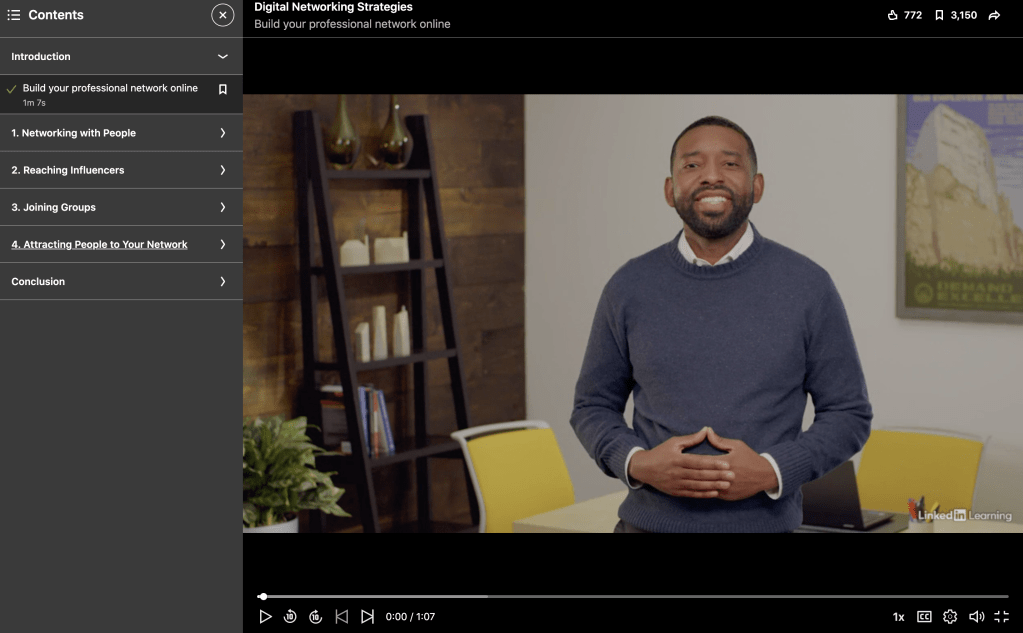
1. Lauren Q: Valerie, I thought I was well versed in successful branding, as a 21-year-old who grew up on social media. However, after watching Christopher Taylors LinkedIn Learning course on Digital Networking, I’ve realized that I don’t have a concrete understanding of this topic. So, in your own words, how do you feel professional and personal branding differ?
For starters, I never liked the term “personal branding.” When we think about the word “personal,” it encompasses elements like family, health, finances, and religion. Throughout your life, those matters are subject to change. I believe this direction of intention is where the critical difference between professional and personal branding lies. While personal branding ebbs and flows, professional branding focuses on forward-thinking and opening doors through learning how you want to be known. Generation x and millennials debate this topic, I find that it is not easy to seamlessly blend your personal life into your career profile. Hence, to ensure one meets their goals, I strongly suggest navigating carefully between the two.
2. Lauren Q: Once you’ve deciphered the differences between these brands, how does an individual create a comprehensive framework?
A comprehensive framework gets compiled through a few different steps. Primarily, I would first recommend looking at your career narrative or story. The narrative element helps build one’s brand and ties in with your mission alignment (aka your passions) by defining what you want to say about yourself. Subsequently, it is pivotal to distinguish what skills you enjoy doing daily. *Note this does not automatically mean the skills you are good at doing. For example, you may be a great writer, but that does not necessarily mean your path is to become an editor. The key here is to understand what you like to do. The third step is to take that know-how and find a work culture that allows you to thrive. Your preferred environment can look like a standard vertical hierarchy or an entrepreneurial vision- it is solely up to you to find the perfect fit. The final piece in a professional framework is establishing your life needs. These needs may alter over time, especially as one’s responsibilities grow, so be sure to check in with yourself often to ensure a healthy balance.
“You may be a great writer, but that does not necessarily mean your path is to become an editor. The key here is to understand what you like to do.”
Valerie Sutton
A brief illustration of my framework is through my passions for fashion, fitness, and careers. My story focuses on exploring and applying career theory, which, in return, utilizes my problem-solving skills to build strategies. When it comes to my preferred work environment, I like an educational setting where I can be intellectually challenged and continually learning. My life requires a work culture that fosters stability and growth.
3. Lauren Q: Reflecting on my past, I figure I have participated in some embarrassing threads and have since changed a lot since those early-grade-school social media posts. How would you suggest integrating personal branding into one’s professional brand?
These threads are a truth a lot of social media veterans face after decades of posting. Some misleading solutions suggest burying the tweet or Facebook comment. However, I believe that route is a missed opportunity for real growth. The reality is that people make mistakes. The crucial difference here is recognizing what you’ve learned and how you can counter your brand in a direction that positively moves forward.
4. Lauren Q: Speaking on behalf of myself and my college peers, we’ve been told interns are an integral part of our professional development. From your experience, what stage should interns be at in their professional branding?
I like to think of careers as an evolving long-term facet of one’s life. Interns are at a unique entry port of their career, which may feel like a lot of pressure. However, if the individual keeps this longstanding perspective in mind, their outlook will hopefully shift from stress to reassurance. From there, they can make a multitude of career decisions following their formed framework, which will only continue to cultivate and enhance their professional brands.
5. Valerie Q: Lauren, what’re your interests?
My interests are currently concentrated on community engagement and public outreach. I am particularly passionate about issues in the spheres of the climate crisis and gender inequity. I find myself drawn toward organizations and events that emphasize the importance of political activism and voting.
“I find myself drawn toward organizations and events that emphasize the importance of political activism and voting.”
Lauren Titchen
6. Valerie Q: How would you define Lauren’s preferred work culture?
In my mind, my preferred work culture does not have to fit the stereotypical 9-5. I enjoy fast-paced environments and find that I produce high-quality work as long as I have a dependable network and a sense of purpose.
7. Valerie Q: Lauren’s life needs?
Being a young woman allows me to have a lot of freedom when it comes to life needs. However, one intention that I see myself needing to honor after graduation is living in a city. I strive after cities as I find that they cultivate diversity and constant development, which are facets that are compelling to my work motivation.
8. Valerie Q: How would you then build your current framework?
If 2020 has taught us anything, reimagining activism is the best way to reach successful systematic change. My passion for authentic development and rhetoric diversification is what drives my work in community outreach. My strengths in written and verbal communication formulate robust organizational strategies. At the same time, my eye for design makes professional content approachable for all. After graduation, I look to further establish my work in Washington, D.C.
I hope this interview offers you helpful insights into learning how to build your professional brand and inspires you to have a similar conversation with your intern! Stay tuned for more posts from this series, and be sure to check out Christopher Taylor’s course that inspired our discussion.
So recently several of my friends have been laid-off during the holiday season. This sucks! There is just no way of making this better through words of encouragement and by telling them this is an opportunity. Opportunity-really? All they are thinking is that they are going into the holidays without a job. So what can they do that will make it suck less? The only way to feel better is getting the next job. It is not impossible during the holidays. If you are in the same circumstance, here are six suggestions to get you started.
The first is that your full-time job is getting a job. You should plan to spend eight hours a day, five days a week focused on your job search.
Create web crawler based on keyword searches. This can save you a lot of time perusing various job site boards. SimplyHired.com is the one I use. There are others, but I find this one useful for the below reasons.
i. Once you decide the best keyword search, sign up for emails to come to you daily –you can locate this function on the left menu bar. ii. Also, sign-in with LinkedIn.com – you can do this on the right hand bar. Now all the job postings that come up will show how you are connected within the organization.
Complete your profile in Linkedin.com. There are several reasons why. First, you most likely don’t have enough keywords to come up in a search. Second, Linkedin ranks you higher in the search when your profile is complete.
– Your tag line is not, “I am seeking a position”. No one is looking for someone who is out of work. It is your specialty or focus. – Create a summary that focuses on your career goal. Start with mission alignment and then your strengths. – Write descriptions for each of your positions. These don’t have should not be long but focused on keywords, scope, and achievement. You can also add documents to these sections to show examples of your work. – Ask for other recommendations from people who will speak highly of your work. – Follow companies that are in your target list to work – i.e. Harvard University. – You want to start posting an article at least once a day. You will come up more often on your contacts feed. This will keep you on top of people’s mind.
Networking! You should look at talking to 3 to 5 people a week. Preferably in person but also over the phone would work.
– Develop a set of informational interview questions that will help you in the job search. – Growth based questions: this allows you to see if there are openings coming up. – Challenge based questions: this allows you to see how you can potentially contribute to current challenges and develop your marketing documents to discuss these challenges. – Skills based questions: where you can see where else you can fit within the organization. – Ask for referrals. – Contact your close network – let them know what is going on and ask if they know someone you could meet with for an informational interview. – Identify second degree connections in Linkedin.com at your target organizations and ask for introductions to them from your connections. – Use groups on LinkedIn to connect with people and answer questions. Answering questions will help to elevate your visibility. – Reach out to executive recruiters in your area. Let them know your mission alignment and strengths and see what they have open at the moment. – Join or reconnect with your professional organization
Apply for positions daily – Create customized resumes and cover letters for each – Apply as soon as you hear about the position. In this case, the early bird often gets the worm.
Prepare for interviews – create practice questions based on the job description and actually practice!
For more detailed information on job search strategies, see my lynda.com video.
It seems like I can’t turn around without being bombarded by articles and blogs lamenting how universities exist to get students and alumni jobs. As a career services director, I applaud the focus on careers as an outcome and agree with many of the suggestions presented. In particular, I agree with all the suggestions from a blog by the Boyer Management Group; however, I do disagree with many of their premises.
First, the author lumps all of higher education together with examples “including William Peace University, Santa Barbara Business College, Missouri State, Boise State, Virginia College, University of Cincinnati, Genesee Community College”. There is a difference between vocational, community, state and research university missions. Not all higher education has the same mission and focus. Depending on the mission budgets vary greatly. I am at a research university where a significant part of our mission is to generate knowledge. Only a small part of the budget comes directly from tuition of the students. Civic education is often cited as a primary role of higher education. By blending civic education with opportunities to practice, you give students the opportunity to build their experiences and knowledge of the employment market. This goes hand in hand with academics and is not the center of a Career Services Office.
Second, they focus on how much time students spend “learning about how to obtain employmentin a career that will span about 40 years”. A career services center can’t anticipate the changes in employment or recruiting methodologies for 40 years. This is where the practical knowledge universities teach is important. Students need to show initiative, be adaptable, and be able to critically think through their decisions. These skills do not come from a career services office alone, but from the dedicated faculty and student life administrators that offer the opportunities for critical thinking and leadership.
Third, the focus of the suggestions are on the job search but not on career decision-making. Career decision-making comes from exposure. In Predictably Irrational “Ariely argues that greater understanding of previously ignored or misunderstood forces (emotions, relativity and social norms) that influence our economic behavior brings a variety of opportunities for reexamining individual motivation and consumer choice, as well as economic and educational policy.” Exposure comes from many sources on a university campus including speaker series, case studies in the classroom, alumni gatherings, and sponsorships; however according to most articles the focus is usually only on career fairs and on-campus interviews as the only option.
Based on the assumptions above, I would add three suggestions to list by Boyer Management Group.
Higher education overall needs to understand their mission and blend career informationthroughout the student’s experience. Each institution should think about how they create “career consciousness” (Gysbers, Heppner, Johnston, 1998, p.8) in their student population and teach them critical thinking, initiative, and the ability to adapt to changing circumstances. In addition, throughout the coursework and extra-curricular activities, they should be exposed to organizationsthat are using the research generated by the university.
Students need to take the initiative to use all the resources that are at hand. Many of the students that come into my office spend more time thinking about what they will have for dinner than they do thinking about their career. Students are the only ones that can do this for themselves. Students need to Decide that is their goal.
The focus of the career services office needs to be on the current student population. Boyer Management cites the student to staff ratio, which is bad across the board at any institution of higher education; however, what makes it worse is having to service alumni, as well. So their figures are off. Career Services are not set up for senior level searches. Sure, we can give general advice, but if you didn’t create a career consciousness, gain critical thinking skills, learn to take initiative and acquire the ability to adapt during your college years, there is not much that a career office can do for you.
In conclusion, higher education is not all the same and it is not designed to get a student a job. It is designed to give students the critical thinking skills, adaptability and initiative to grow and adapt to a constantly changing labor market. Graduates should be able to make sound decisions for the next forty years, if done correctly. Can we do a better job of helping students to understand careers and land that first job? Absolutely!
At this time of year students flock to my office wanting a résumé review. Invariably when I start advising them, they stop me and say that is not the rule they learned for resumes. My reply – there are no rules! Resumes are subjective and dependent on the reader. Now there may be some norms associated with a particular sector, specific company or a specific country, but overall there are no rules. Examples of why there are no rules include:
In the U.S.A. you don’t put any personal information (i.e. marital status, children); however, in France it is still common.
McKinsey & Company tells you what they would like to see in a résumé vs. a non-profit organization that may want to hear a compelling story that ties to their mission but have no suggested structure.
The reader has a personal preference for bullets over paragraphs.
Investment Banking may care about grades but a non-profit organization may not care about grades.
Here are a few tips to get you started on a no rules resume:
1. To identify industry standards check with a professional association in your field. Often they have very specific advice for career related topics. Also, there are a variety of sites like wetfeet.com that cover many industries in detail. Finally, ask for advice on professional networking sites like linkedin.com.
2. To identify company standards check out their career section of the website. Also, find a contact in the company that can review your résumé for you. They will be the best help.
3. To identify country standards check with your contacts in that country. If you do have contactsGoingGlobal.com has wonderful guides for purchase at a reasonable rate, which tell you everything about finding a job in that country.
Since resumes are subjective, get at least three reviews. One from someone in the industry, a second from someone who knows you well and can tell if something is missing and a third from someone who has a solid understanding of resume development.
O.K. there are a few rules… no spelling errors, no grammar errors, and make it easy for the hiring manager to find the information they need to bring you in for the interview. Good luck with your résumé!


 Career Solutions by Valerie